New York Public Library

 [New York Public Library, May 2008.]
I'm a librarian (albeit a corporate librarian), but I don't read in libraries like this woman. It has to do with my bowels.
I exaggerate. But there is something about bookshops and libraries that induces bowel movement in a lot of people. The common "something" shared by these two most venerable establishments is, of course, books. Books are laxatives. Masses of unread books produce anxiety. It is like public speaking. You stand before aisles of unread books and it is the same as standing before the law. They judge your ignorance.
Before the Law is, of course, is the title of the most famous parable by Franz Kafka, which can be found in his Complete Stories . "Before the law", it begins, "stands a doorkeeper. To this doorkeeper there comes a man from the country and prays for admittance to the Law. But the doorkeeper says that he cannot grant admittance at the moment." The man waits his whole life, dying on the doorstep. Just before his last breath he asks the doorkeeper one last question: "'Everyone strives to reach the Law,' says the man, 'so how does it happen that for all these years no one but myself has ever begged for admittance?' The doorkeeper recognises that the man has reached his end, and, to let his failing senses catch his words, roars in his ear: 'No one else could ever be admitted here, since this gate was made just for you. I am now going to shut it.'"
This short story was published in Kafka's lifetime, but it is also part of his posthumously published novel, The Trial . The multiple meanings of the parable are discussed at length by the teller of the tale, a priest, and the novel's main protagonist, Joseph K. However, they do not discuss the ignorance of the man for failing to notice that no one else enters his door.
 Each book in a library is for you. You are ignorant before it. And you may be ignorant after it too, depending on how good it is. But you can't judge it till you open it. You can't judge a book by its cover. But it judges you if you don't enter into its world.

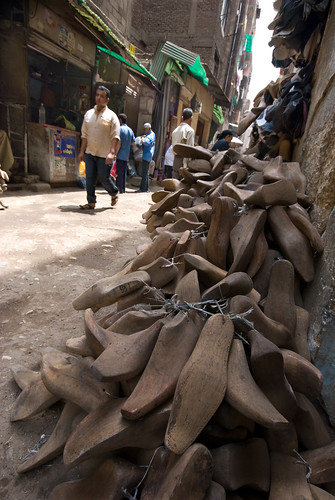
 Max Rodenbeck writes: "There remains a sensible antiquity to the rhythm of the Old City, to the worn texture of every surface and the intimate scale of public space. The narrow lanes away from the main streets may no longer be overhung by the traditional tiered upper floors that closed out the sky and brought welcome shade in the summer, but they are still no wider than the medievally prescribed breadth of two laden camels, and still they are largely pedestrian."
 wrote of the old alleys in his notebook for 9th January 1850:
 describes a Cairo market:

 Posts

